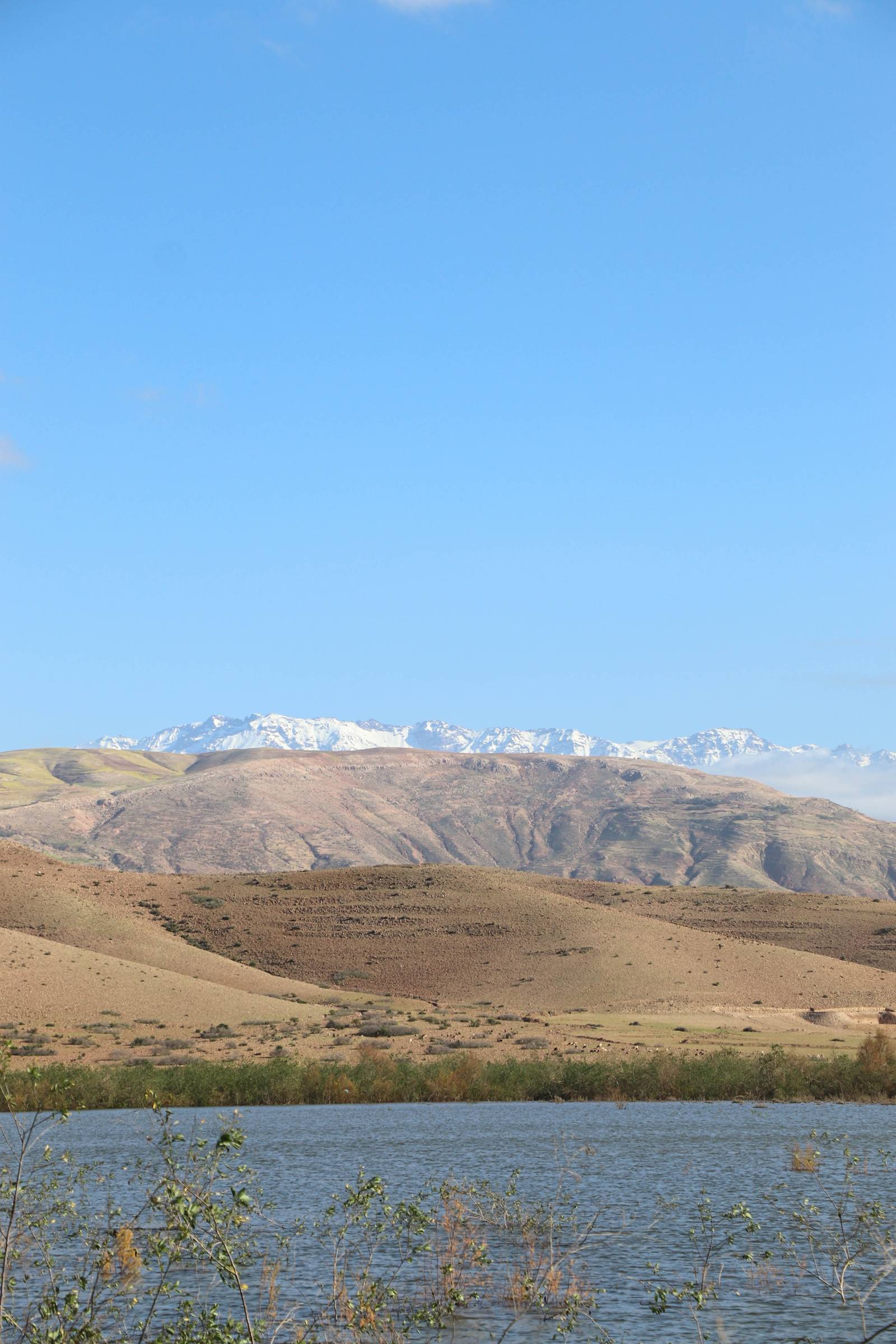



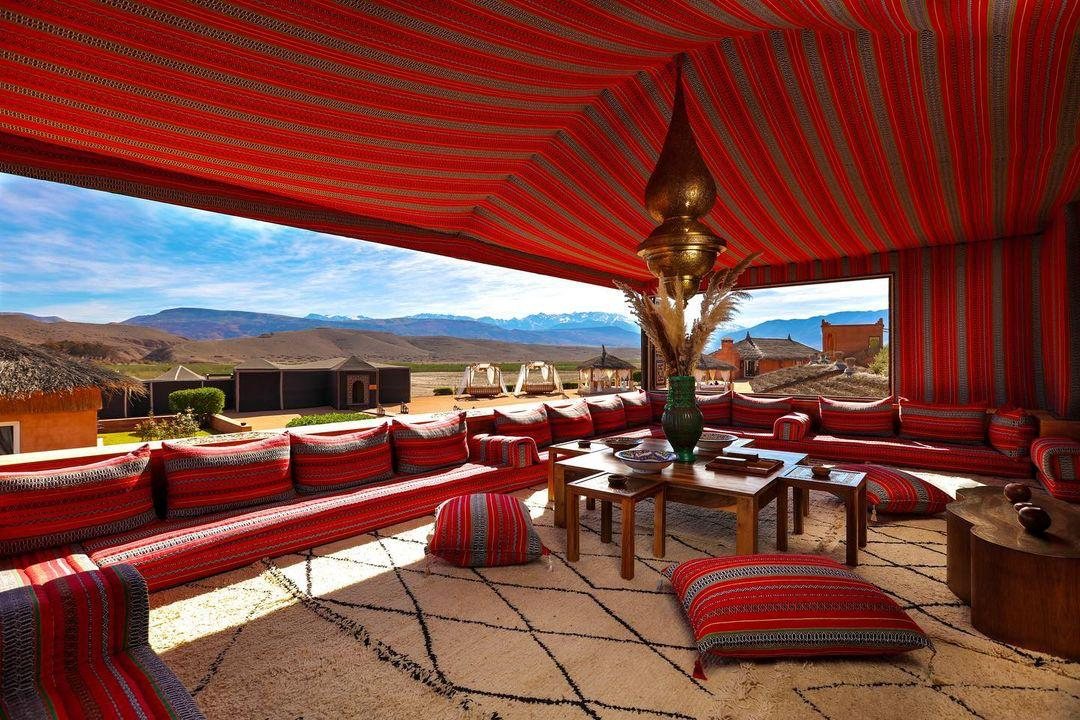
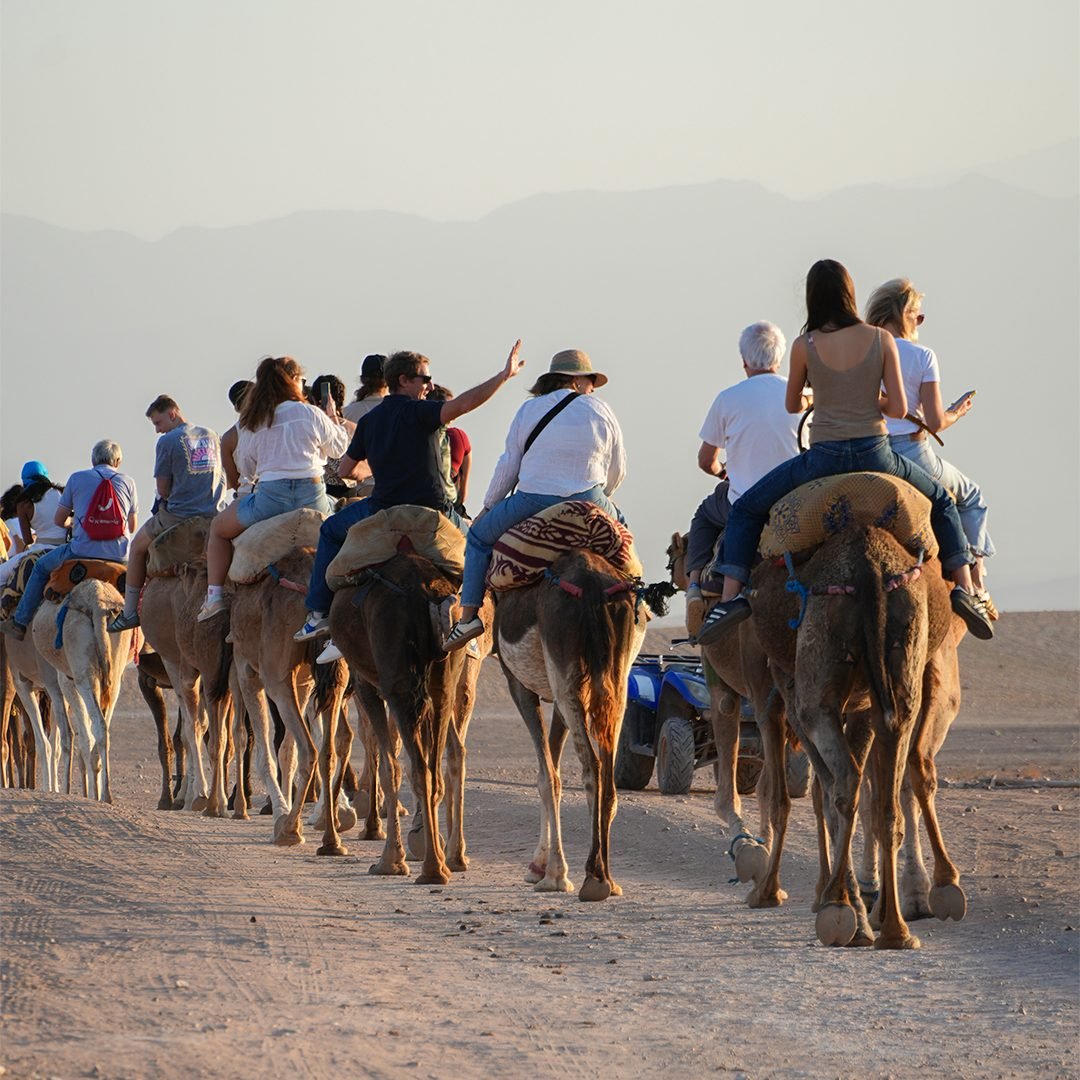
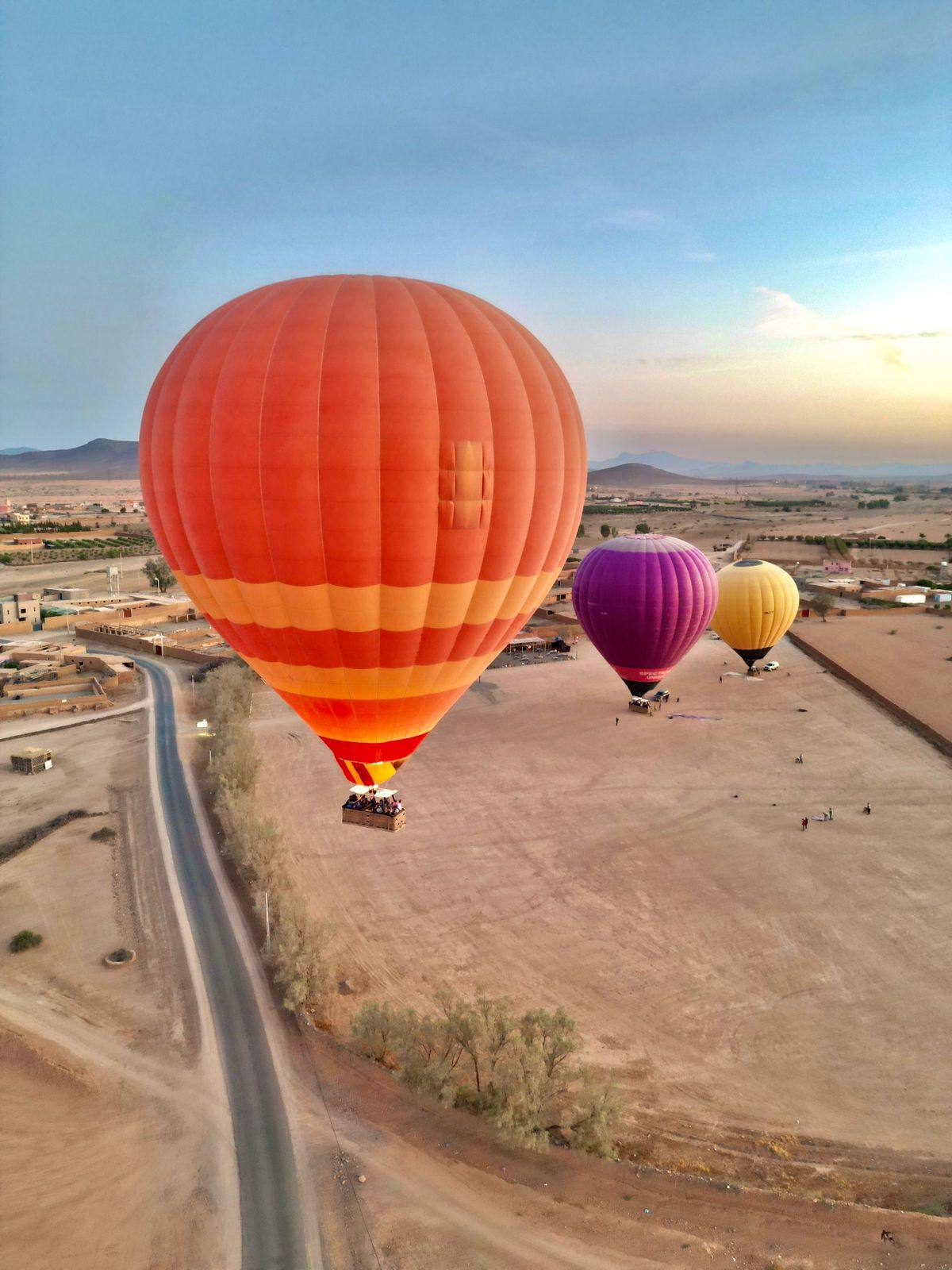
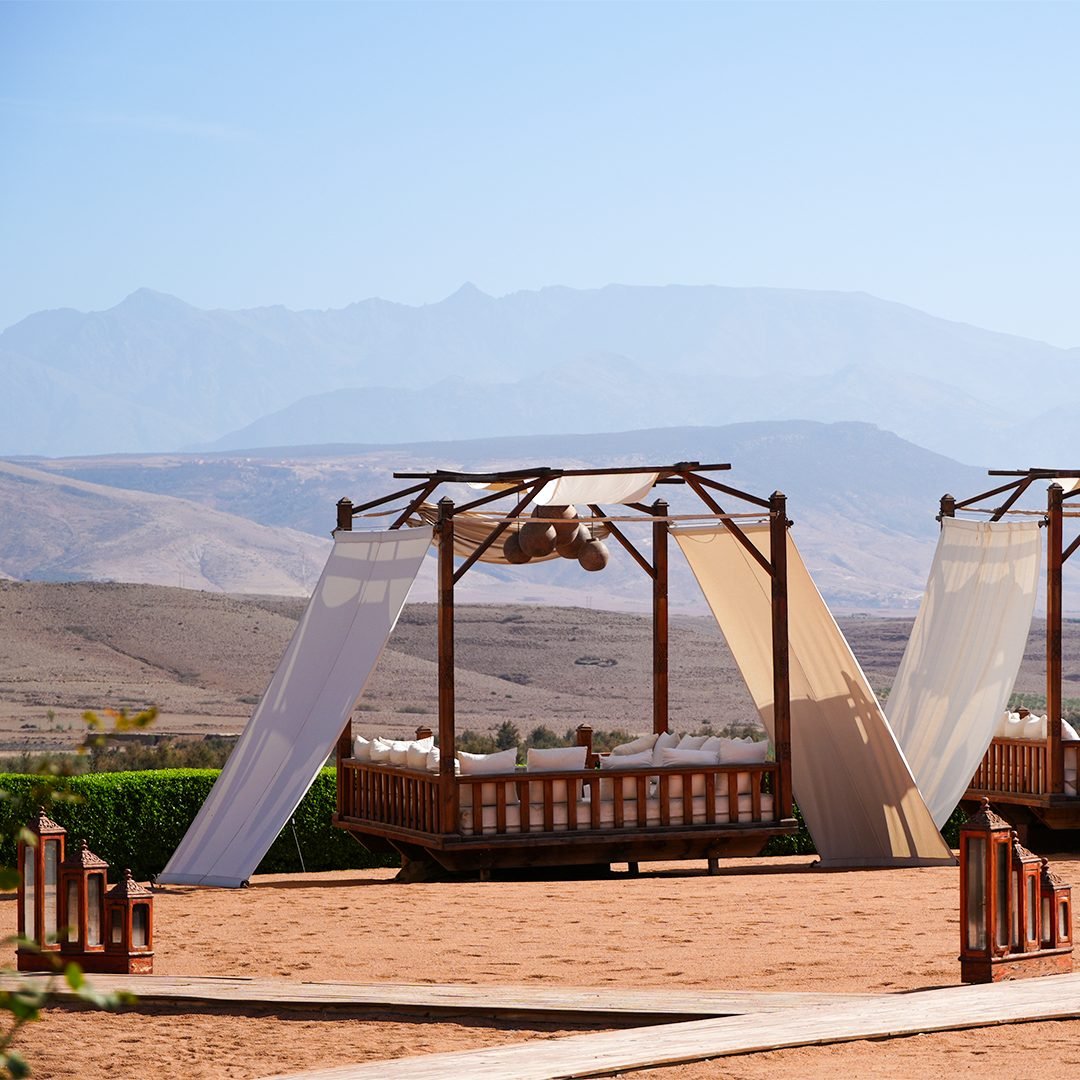
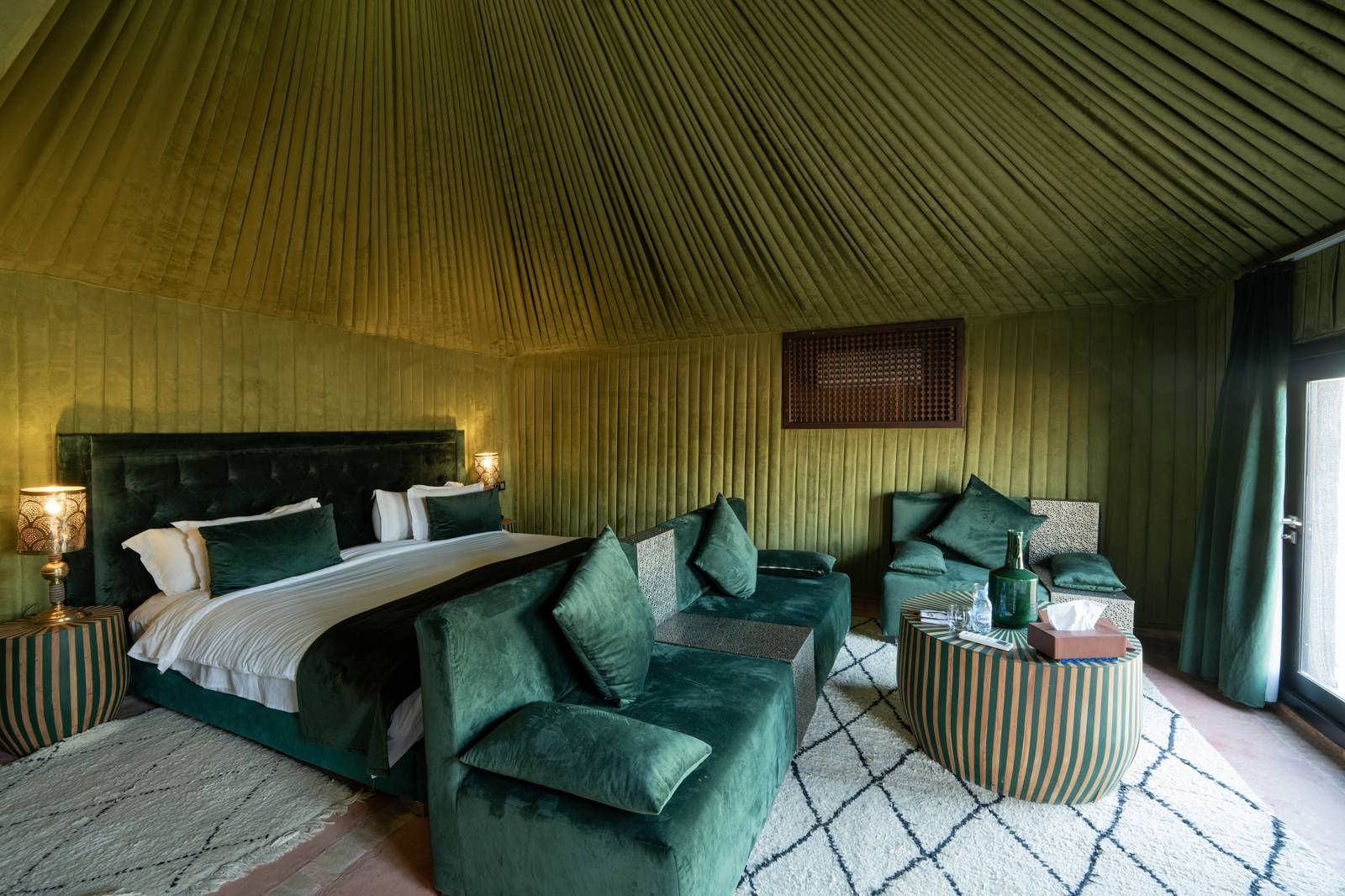
The first thing most people say when they arrive at Agafay is that it does not look like the desert in the photographs they had in mind. There are no towering orange dunes here. Agafay is a stone desert, a rolling landscape of pale, sun-bleached hills, dry riverbeds and hard-packed earth, folded up against the foothills of the High Atlas.
That difference is not a disappointment. It is the reason Agafay works as a destination at all. The dunes of Merzouga are a nine-hour drive from Marrakech. Agafay is forty minutes. You can leave the medina after lunch and be watching the sun go down over open country before dinner.
The light is the main event
Agafay reads as flat and monochrome in the middle of the day. Between eleven and four, the sun sits high, the shadows collapse, and the hills lose their shape. Then the light drops, and the whole landscape turns on. The folds in the ground come back. The colour shifts from grey-beige to apricot to a deep rose, and the Atlas range behind it goes purple.
If you have one evening, spend it outside. Every guest who books a single night and plans a full day of activity ends up saying the same thing: the best hour was the one they spent sitting still.
What the ground is like underfoot
Hard. Agafay is compacted clay and loose stone, not sand, which is why quad and buggy circuits work so well here and why walking is genuinely pleasant. You will not sink, you will not lose a shoe, and the tracks are firm enough that a normal car reaches most of the region without difficulty.
Bring closed shoes if you plan to walk any distance. The stones are small and sharp, and sandals get old quickly.
The lake changes the picture
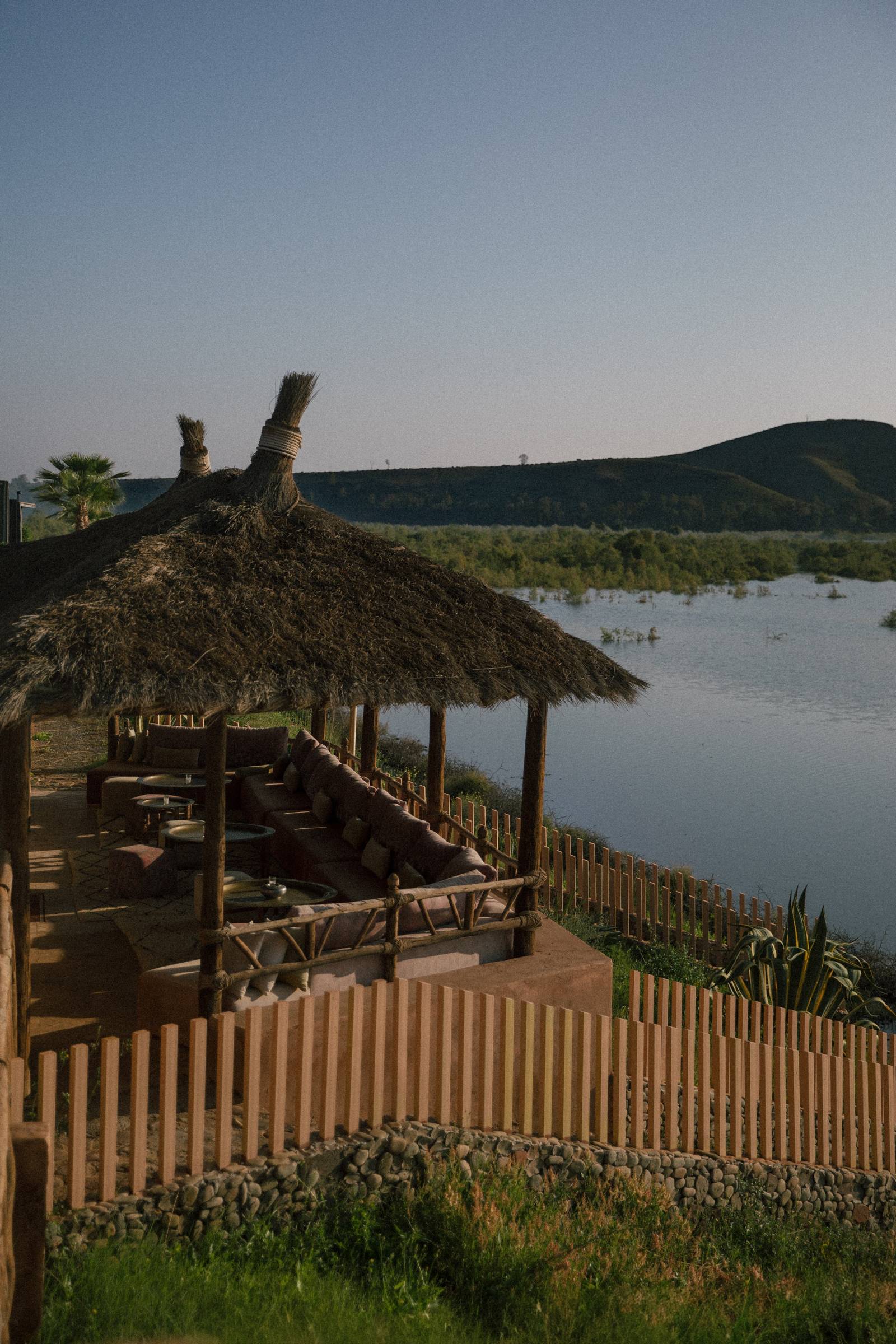
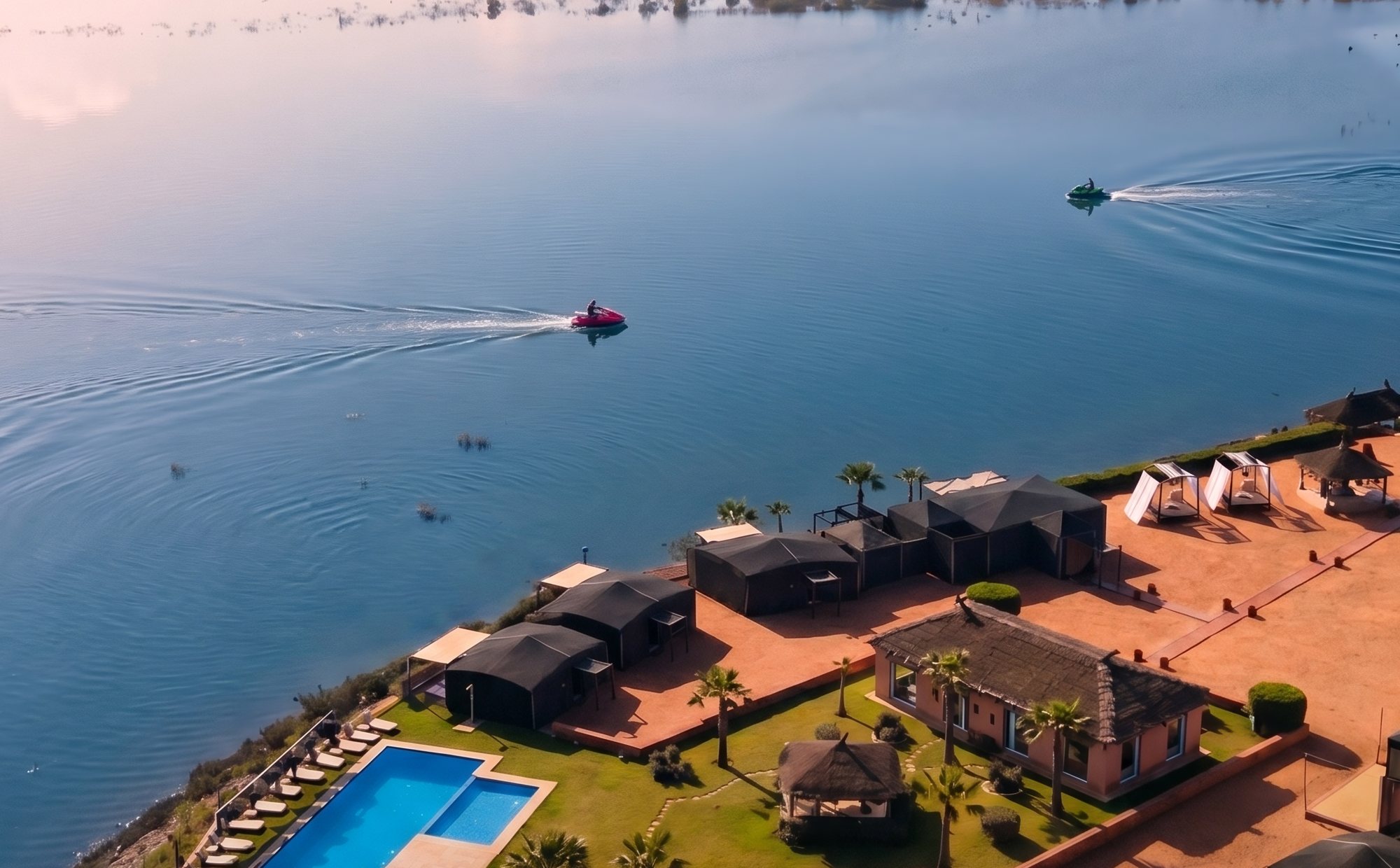
Most descriptions of Agafay leave out the water. Lake Lalla Takerkoust sits on the western edge of the region, a reservoir held back by a dam built in the 1930s. It brings a band of green into an otherwise dry landscape, and it moderates the temperature noticeably in summer.
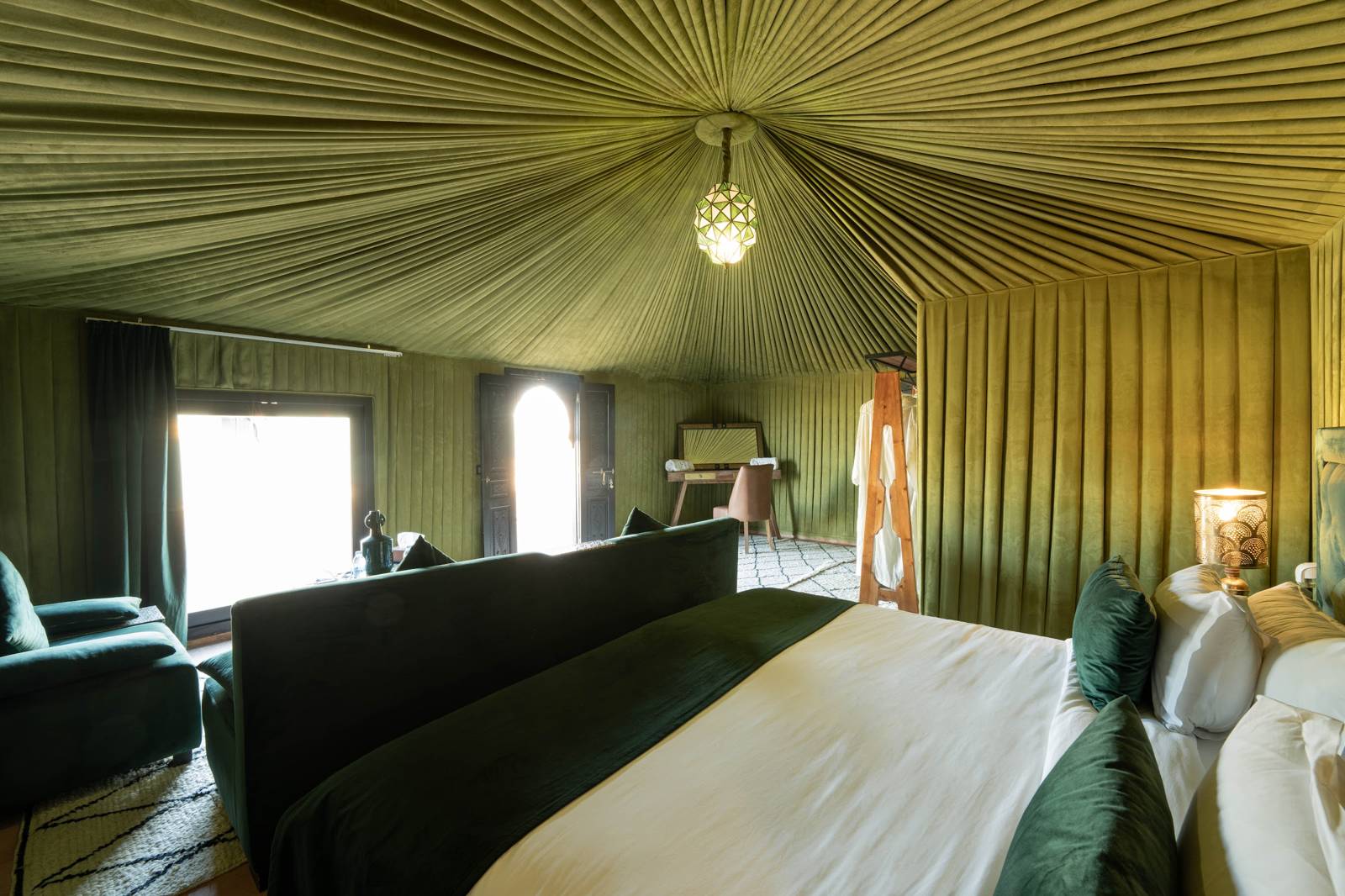
From the ridge where our camp sits, you get both at once: the stone hills on one side, the water and the eucalyptus forest on the other. That combination is unusual even within Agafay, and it is the reason the site was chosen.
How long to stay
One night is enough to see it. Two nights is enough to stop checking your phone. Many guests who come for one night wish they had booked two.
If your trip is built around Marrakech, the pattern that works best is to put Agafay in the middle rather than at the end. Three days in the city, two nights out here, then back in for a final day. You return to the medina with the energy to actually enjoy it.
A note on the word 'desert'
Agafay is technically a semi-arid steppe rather than a true desert, and locals will happily tell you so. It receives a little rain in winter, and after a wet spring the hills carry a thin green fuzz for a few weeks that surprises everyone who sees it. If you visit in March or April, you may catch it.